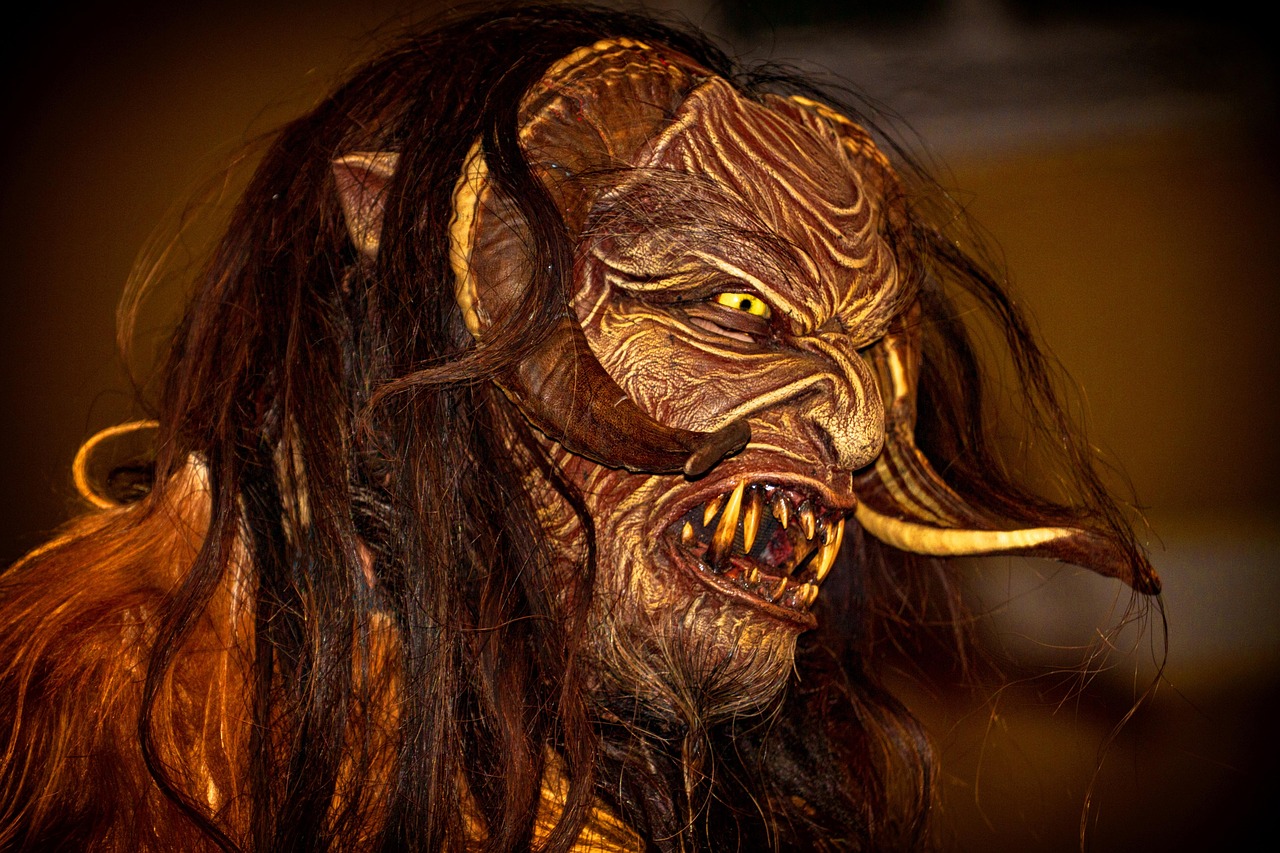
December in Central Europe is not only about Christmas markets, delicious mulled wine, and glimmering lights. The festive charm comes with a "nightmare", Krampusnacht, the night of the Krampus. This ritual, that is held in Austria, Germany, Hungary, and some areas of the Czech Republic, takes the blending of pagan folklore and Christian customs as one of the most spectral and one of the most interesting winter rituals in Europe.
The night of December 5th is the time when Krampus comes after St. Nicholas hands out presents to the good children. In furs, with scary masks on their faces, and armed with chains or birch rods, the Krampus characters parade through the villages, mixing in with the throng of people and thus producing a show of controlled chaos.
Krampusnacht is not a fright night, only as it represents the folklore, the community, and the spirit of the Alpine winter. So, why not take a trip through the different regions of Austria and Central Europe to discover their diverse ways of celebrating this spooky yet magical custom?
The Origins of Krampusnacht
The account of Krampus is very ancient and was already known before the Alps were Christianized. Krampus is believed to be a monster having its roots in the Alps' pagan (nature-worshipping) customs when the midnight sun winter festivals were being held there, and they usually were filled with wild and brutal figures made of animals' skins or masks, symbolizing the dark side of nature. As Christianity spread through Europe, these pagan festivals were mixed with religious stories. In that way, Krampus became the opponent of Saint Nicholas, the dark twin of Jesus's helper.
As per the myth, on the one hand, Saint Nicholas rewards children who have been good throughout the year with gifts and sweets, and on the other hand, Krampus is the one who punishes the naughty kids. The term “Krampus” was taken from the German word krampen, which means “claw.” He is usually shown having long horns, red eyes, and a forked tongue, a scary contrast/rival to the benevolent Saint.
By the mid-sixties, the Alpine Christmas feast had incorporated the figure of Krampus. December 5th night, Krampusnacht, became the night before Saint Nicholas Day, when these two characters would visit their stops hand in hand, thus a mixture of terror and celebration has been exciting visitors and residents all through these years.
Krampusnacht in Austria: The heart of the tradition
Austria is the epicenter of the Krampusnacht festival. The custom is alive, unrefined, and very much part of the local culture in the little villages between the snow-covered Alps.
The towns like Salzburg, Innsbruck, and Styria are not only geographical locations but also areas where hundreds of people in grotesque Krampus costumes perform parades and processions, called Krampusläufe, and thus these towns become theatrical stages.
Salzburg: The Classic Krampus Run
Krampuslauf in Salzburg is one of the most ancient and fascinating events. Alongside the march, the entire old town is bubbling with sounds like the ringing of cowbells, drumming, and the blowing of horns. Meanwhile, the Krampuses in the streets are also visually illuminated by the fire of torches.
With the architecture of the Middle Ages and snowflakes beautifying the frame, you get a scene that can easily be from a folk tale. Not only locals but tourists seem to love the intensity of the presence of the masked figures in the narrow streets, and the angels and Saint Nicholas help to enhance the scene.
Tyrol and Innsbruck: Wild and Authentic
The Alps of Tyrol are the place where the celebrations are more intense and even more wild-spirited. A few miles away from Innsbruck, there are small Alpine villages that have these community-based runs, which offer traditions passed down through families.
In the woods near the villages, you can see locals with hand-carved wooden masks, each one as individual and detailed as it terrifies you. It is said that those who make or wear a Krampus mask feel like they are not only with their forefathers but also in touch with the harshness of the winter season of nature.
Styria and Carinthia: Artistic and Cultural
The Krampusnacht in Styria and Carinthia is more like art. There are many small towns that hold exhibitions which showcase old masks, detailed costumes, and photos that show the history of the festival for decades. These areas concentrate on bringing the lore. Thus, they have story nights and have workshops that teach the history of Krampus.
Krampus Across Central Europe
Despite Austria being the homeland of Krampus, the tradition has spread not only in the neighboring countries but also in the heart of Europe, where every place has its peculiarities.
1. Germany: The Bavarian beast
We can call the Krampus parades in southern Germany, Bavaria in particular, as Klausentreiben or Perchtenlauf. These celebrations are very exciting because, in most cases, the differentiation between Krampus and Perchten (the spirits of winter) is violated.
The German versions prefer to incorporate more complex concerts. In a town, besides history, they also combine the legend with the party. Dressing up is an important aspect of some places where they hold Krampus costume competitions.
2. Hungary: Busójárás
The speakers of Hungarians hold a similar celebration under the name of Busójárás, which is done in February to expel the winter's evil spirits. It is not a Krampusnacht-like festival, although it has the same wildness and pagan roots.
In the festival, there are masked men, noisy music, all of which serve well as a reminder that there are several versions of dark winter celebrations in Central Europe.
3. Czech Republic and Slovakia: The mischievous companion
In the Czech Republic and Slovakia, it is said that Krampus is the companion of Saint Nicholas on December 5th. St. Nicholas, Krampus, and an angel, also called the trio, perform home and school visits where they reward or warn children.
The Krampuslauf: A parade of fear and fun
One of the hallmarks of each Krampusnacht festivity is the Krampuslauf, the Krampus run. Such processions are unruly, exaggerated, and, quite unexpectedly, in very good spirits.
Citizens and travelers line the streets as actors in bulky fur costumes, hellish faces, and sleigh bells that tinkle, crash after another through the avenues. The atmosphere is full of smoke, laughter, and sudden screams.
While the practice may sound frightening, the Krampusläufe of today are celebrations with a lot of good humor. The different clubs and associations of the local communities spend quite some time preparing their costumes, which are usually made with wooden carvings and adorned with real fur. The work of the individual masks is astonishing, a craft that goes back through time and has been handed down from one generation to the next.
Some of the most famous Krampus runs are:
-
The Salzburg Krampuslauf: It is the largest and most traditional run in Austria.
-
The Innsbruck Tyrolean Parade: It is well known for its authenticity and Alpine charm.
-
The Kitzbühel Krampuslauf: A show with more than 1,000 participants.
-
The Munich Krampuslauf (Germany): It attracts people from all over the world.
-
The Gastein Valley Krampuslauf: It is situated in a beautiful mountain town.
Costumes and masks: The art of the Krampus
One of the most fascinating aspects of Krampusnacht is the genius of the costumes. The traditional outfit of the Krampus typically includes rough sheepskin or goat fur suits, hand-carved wooden masks that show the devilish features of the face, bells taken from the cows and put on the belts, which produce a constant clanging sound, and chains or birch rods that are used to attract more people dramatically.
In Austria, particularly in Tyrol and Salzburg, creating Krampus masks is a skill that is highly respected, wherein the craftsmen take a lot of time to carve and paint every mask. They make sure that they are not the same in any way. The result is a rich yet hypnotic display of the artistic skill of the folklore.
Why is it worth visiting the Krampusnacht?
Krampusnacht, Austria and Central Europe’s most spine-chillingly festive celebration, not only gives a fright to the participants, but it also lets one have a peek at a living tradition that stands as a bridge between the ancient and the modern, the scared and the happy ones.
Seeing the processions, hearing the cowbell-sounding through the snow-laden streets, and absorbing the communal ecstasy of characters being brought to life from folklore of so many years, the memory of such an event is with one long after the dawn of the night.